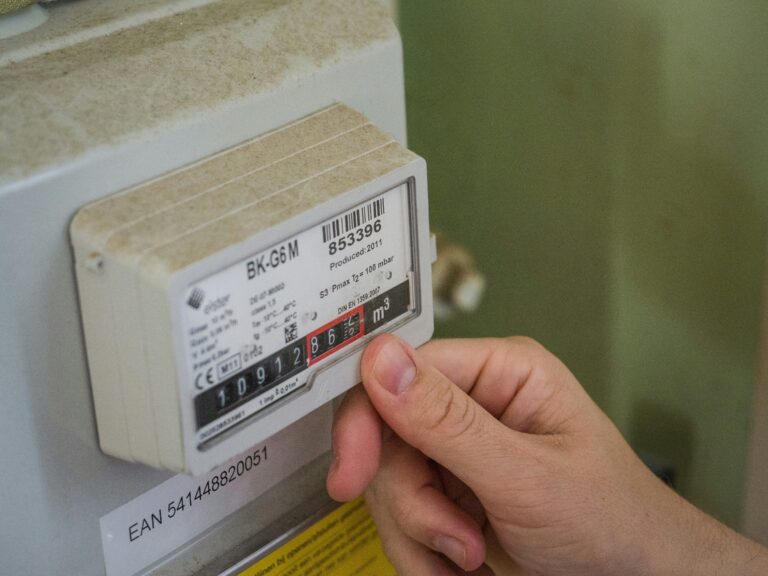

New ranges, a second fryer bank, a combi oven or a whole new kitchen line can push a site’s gas demand well past what its meter was designed for. For restaurants, takeaways, hotels and school kitchens, a commercial kitchen gas meter upgrade is often the thing standing between a finished fit out and opening day.
This guide explains how to tell if your meter is big enough, what an upgrade involves and how to plan it so the kitchen opens on time.
Why Kitchens Outgrow Their Gas Meters
Catering is one of the hardest loads on a gas supply because everything tends to run at once during service. A boiler can cycle on and off; a busy kitchen at 7pm has every burner, fryer and oven firing together. A unit that used to be a shop or office was probably fitted with a small meter sized for a single boiler, often a U6. Add a commercial kitchen and the meter, and sometimes the service pipe behind it, can no longer deliver enough gas.
Signs Your Kitchen Needs More Gas
- Flames drop or burners go out when the whole line is on
- Appliances lock out at peak service
- Your engineer measures low working pressure at the appliances
- You are adding equipment with a significant gas rating
- The site is changing use to a restaurant, cafe or takeaway
Work Out the Kitchen Load
Add up the gas input of every appliance from its data plate: ranges, fryers, chargrills, ovens, bratt pans, water heaters and the heating boiler. Kitchens get little diversity allowance, so assume most of it runs together. Then compare that total with your meter. As a rough guide, a U6 serves up to about 65 kW, a U16 up to about 170 kW and a U25 up to about 270 kW. Our guide to commercial gas meter sizes has the full table.
What a Kitchen Meter Upgrade Involves
Meter exchange only
If the service pipe and main can deliver the extra flow, the supplier’s Meter Asset Manager swaps the meter for a larger one. This is the quick and cheaper route and can often be done within a few weeks once a contract is in place.
Service pipe upgrade
If the service pipe is too small, the gas network or an independent connections provider has to lay a larger one. That means a quote, a survey, possibly highway permits and excavation, and typically two to three months or more. This is the scenario that catches out fit outs.
Inside the building
A Gas Safe registered engineer with commercial catering competence must size and install the internal pipework, fit the appliances and commission them.
Do Not Forget the Ventilation Interlock
Commercial kitchens with mechanical extraction must have a gas interlock, so gas to the appliances shuts off if the ventilation is not running. Your Gas Safe engineer will check this at commissioning, and an inspector or insurer may ask for evidence. Build it into the fit out budget from the start.
Plan the Upgrade Around Opening Day
- Get the appliance schedule from your kitchen designer as early as possible
- Ask for a load check before ordering equipment
- Make a network enquiry straight away if the service may need upsizing
- Agree a supply contract early, as the meter cannot be changed without one
- For schools, book the work for a holiday period and start a term ahead
Schools and academy trusts face the same issue with kitchen refits; see our guide to new gas connections for construction projects and schools.
Avoid Paying More Than You Need
A bigger meter can carry higher standing charges, and a site that changes use often ends up on an out of contract or deemed rate without anyone noticing. When we manage an upgrade we review the supply contract at the same time through our business gas procurement service, so the new meter goes live on a competitive price.
Frequently Asked Questions
What size gas meter does a commercial kitchen need?
It depends on the total gas input of all appliances. A small cafe may manage on a U16; a busy restaurant with ranges, fryers and grills often needs a U25 or U40. Your engineer calculates the load from the appliance data plates.
How long does a restaurant gas meter upgrade take?
A straightforward meter exchange can take a few weeks. If the service pipe needs replacing, allow two to three months or more, so start before you order equipment.
Can I open my restaurant before the meter is upgraded?
Only if the existing supply can safely run the appliances you use. Running a kitchen on an undersized meter causes poor performance and lockouts, so many operators phase in equipment until the upgrade is done.
Who arranges a gas meter upgrade?
Your supplier’s Meter Asset Manager changes the meter, the gas network handles any service pipe work and a Gas Safe engineer does the internal work. E for Energy coordinates all of them for you.