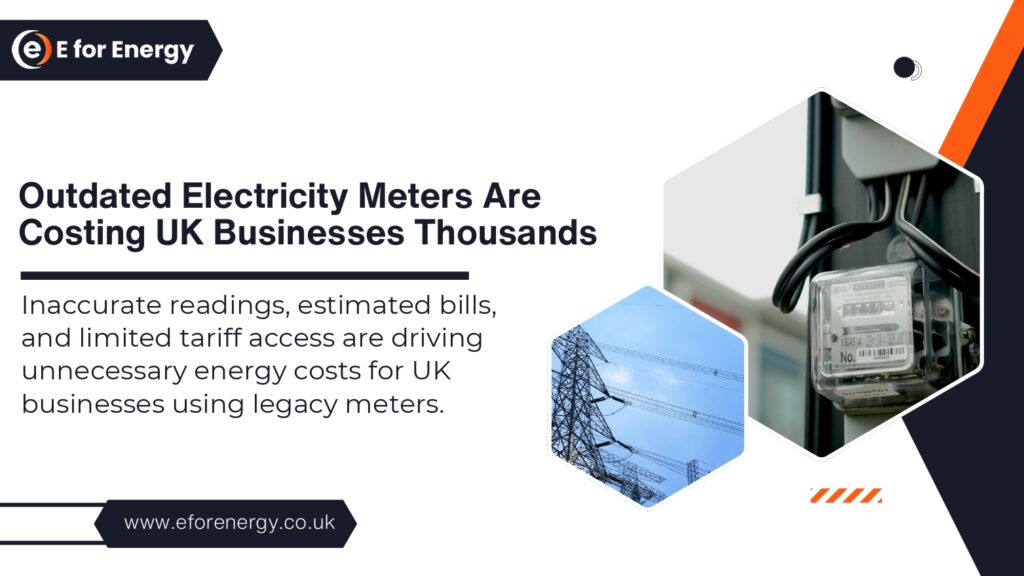
Many businesses in the UK lose thousands of pounds each year because they have inaccurate, old-fashioned ways of measuring their electrical consumption using meters and not using smart meters or smart meter installation. The volatility of energy prices and the tightening of bill calculation methods by suppliers are causing businesses to have ‘blind spots’ where they are overpaying for electricity as a result of utilising existing legacy metering equipment such as traditional analogue or RTS meters instead of upgraded smart energy meter systems.
The amount of money that is lost to businesses through these inefficiencies can be minimised by utilising the latest smart metering technologies such as a new smart meter that enable business owners to better monitor and analyse the electrical consumption of their operations and to provide them with immediate and accurate access to electrical energy consumption data through modern electricity meters.
What Financial Losses Occur Due to Outdated Metering Systems?
1. Overbilling Due to Inaccurate Consumption Data
Outdated energy meters provide erratic and inaccurate readings to energy suppliers. Since they have no current readings on customer usage of energy, the suppliers use estimates based on historical averages when billing their customers. Without access to real-time, accurate energy usage data through updated electricity meters or smart meter reading, businesses will never have the ability to confirm whether they are being billed accurately or track their actual usage; thus, they are not able to stop any financial leakage happening without their knowledge.
2. Limited Access to Cheaper Pricing Structures
The energy suppliers provide the lowest unit rates for their customers that have either half-hourly or smart meters associated with them. However, the energy suppliers do not have any accurate energy consumption data for customers with outdated metering systems to apply to their advanced pricing models. As a result, these customers are typically placed on more expensive/basic pricing plans and therefore miss out on competitive contract opportunities that the E for Energy has negotiated through. Updating through a smart meter fitting system helps avoid this.
3. Unable to Detect Energy Losses
A legacy meter does not provide any detail on a business’s highest level of electricity demand, how inefficient their equipment is performing, or identify any unusual usage patterns in how the electricity is used. This means that without granular data from a smart energy meter, it will be impossible for a business to understand what is creating any unnecessary electricity usage and ultimately leads to preventable electricity waste in energy-intensive sectors such as hospitality, retail, warehousing, manufacturing, and data centres.
4. Risk of Estimated Power Bills
Legacy meters generate periodic manual readings that create significant holes in the usage record of electricity, resulting in suppliers needing to estimate usage via a default setting. As estimates are usually formulated conservatively, this often means that the estimate will be on the higher side of the true fair value. As a result, businesses must spend time disputing invoices and will likely be in an inflated situation until the dispute is resolved. This issue is reduced when using a prepaid electric meter or upgraded smart meters.
5. Delays in Change of Tenancy Switching
Old meters are inefficient to validate historical reading data for the purpose of change of tenancy (COT) or relocation, leading to increased time for the business to switch to a lower rate. During this time, many businesses will suffer from a deemed or out-of-contract rate, which will often be the most expensive in the market. A few weeks on either of these rates can result in increased energy costs and cash flow strain. A new smart meter helps avoid such delays.
6. Increased Insurance Costs for Suppliers
When suppliers cannot use accurate usage data, they add a risk factor to their pricing structure. The result of this is an increase in the unit and standing charges on the price they charge to the customer. Modern smart meter installation and upgraded electricity meters eliminate this problem by providing accurate, easy-to-understand data for consumers on how much energy they use.
Conclusion
An obsolete meter system is not only a hindrance but serves as a constant financial liability for UK Companies. The inaccurate data around what is being used, costly default rates, delays in switching to another provider, and lost energy savings opportunities all are far more expensive than what it costs to update your metering system.
E for Energy helps businesses move to modern compliant Smart Readiness Meter Systems, including smart meter fitting, smart meter installation, smart energy meter upgrades, and advanced electricity meters, to gain access to lower unit rates, equitable billing and long-term savings as Energy Cost Specialists. In business, every penny counts so proper metering is the first crucial step towards managing your energy costs and maintaining your profit margin.
Less than that is only recording your energy consumed, modern meters such as new smart meter systems are your protection against eroded profit margins by optimising the usage of energy consumed.